Co-op Wires and Midnight Spikes: Rural America's ISPs Tell All
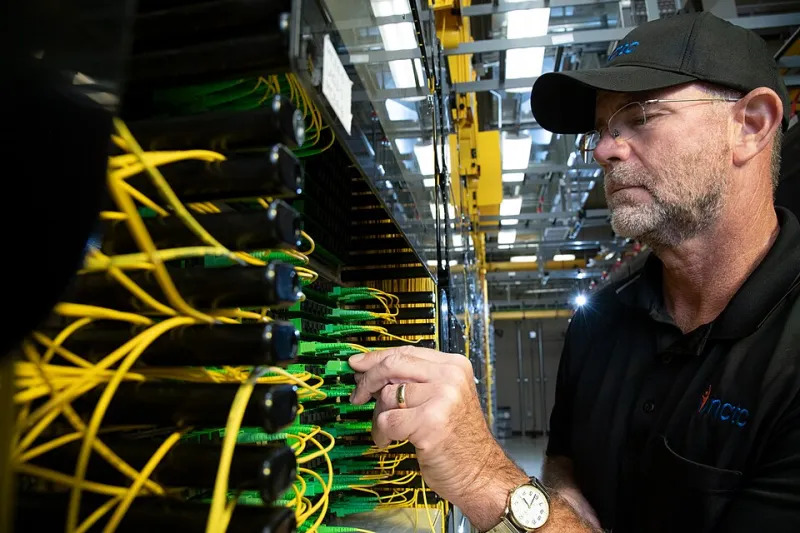
Photo: USDAgov, Public domain, via Wikimedia Commons
Darrell runs the billing office, fixes outages, and answers the phone at a 900-subscriber broadband co-op somewhere in eastern Kansas. He agreed to talk to us on one condition: no town names. Fair enough.
What he told us over forty minutes was the most honest picture we've ever gotten of how adult content actually moves through small-town America — not through the lens of coastal data centers or national CDN dashboards, but through the people who literally climb the poles.
The 10:30 Peak Is Real, and It's Not What You Think
Ask a big-city network engineer about adult traffic and they'll tell you it peaks around midnight. Darrell's numbers tell a more textured story.
"Our spike hits around 10:45," he says. "Church deacons need their sleep." He laughs, then clarifies: it's less about piety and more about rhythm. In towns like his, people are up at 5:30 for livestock or a commute to the county seat. The late-night scroll that coastal analysts chart at 1 a.m. simply starts earlier when your alarm does.
A technician at a co-op in rural Tennessee backed this up, with a twist: Friday nights run quiet. "Friday in the fall, everybody's at the game or the drive-in two counties over. Saturday after midnight? That's our biggest window of the week."
Bandwidth Math at Co-op Scale
Here's what surprised us most. At the big national level, adult video is often estimated at a quarter or more of internet traffic. At the co-op level, the numbers look different — and the reasons are practical, not moral.
- Video quality caps the load. Many rural subscribers are still on plans measured in double-digit megabits. Streamers self-select into lower resolutions, which flattens the bandwidth curve.
- Small pipes mean visible spikes. When twenty households decide to watch something at once, a 10-gig backbone link feels it. One operator in Arkansas said he can "name the night" certain viral content dropped just by looking at his utilization graphs.
- Cellular siphons the rest. A huge share of rural adult browsing never touches the local ISP at all. It rides on the same towers that carry everyone's texts. The co-ops know this and mostly shrug.
The Filtering Requests Are Rarer Than You'd Assume
We expected a flood of stories about parents demanding content filters. We got a few — but the reality is more mundane.
"I've installed maybe a dozen DNS filters in five years," says a manager at a southern Missouri telephone co-op. "Most folks around here either handle it at the router themselves or figure the kids will find a way around it regardless. Which, honestly, they will."
The bigger operational headache isn't filtering. It's legacy equipment. Several ISPs we spoke with still run middleware boxes from the 2010s that log and categorize traffic for their own reporting — and those boxes were never designed for today's encrypted, CDN-fronted adult web. The result is logs full of useless generic entries, which is fine by the ISPs. Less data, fewer awkward conversations at the annual member meeting.
Why Co-op Culture Keeps Things Quiet
There's a structural reason these conversations stay private. Rural broadband co-ops are often member-owned. The board of directors might include your neighbor, your dentist, and the woman who sells you feed. Nobody wants to stand up at a meeting and discuss what the utilization charts imply about the community's viewing habits.
So the informal policy at most of these shops is simple: don't look, don't log, don't discuss. One technician put it bluntly: "We carry the traffic same as we carry everybody's. It's not our business what's in the packets, and around here, keeping it that way is how you keep customers."
What This Means for the Bigger Picture
If you build maps of American adult traffic using only national data, you'll paint small-town America as either an afterthought or a stereotype. Talk to the people running the wires and you get something truer: a population that consumes like everyone else, just earlier, on slower pipes, with better privacy — ironically — because their ISP is small enough to not care and local enough to know better than to snoop.
The last independent ISPs in America aren't just keeping rural broadband alive. They're quietly maintaining one of the internet's oldest unwritten codes: what flows through the wires stays in the wires.
We'll drink to that. From a safe distance, over a fiber line neither of us has to bill.