Laminated Flyers and Corkboards: The Highway Bookstores That Invented the Steamy Link

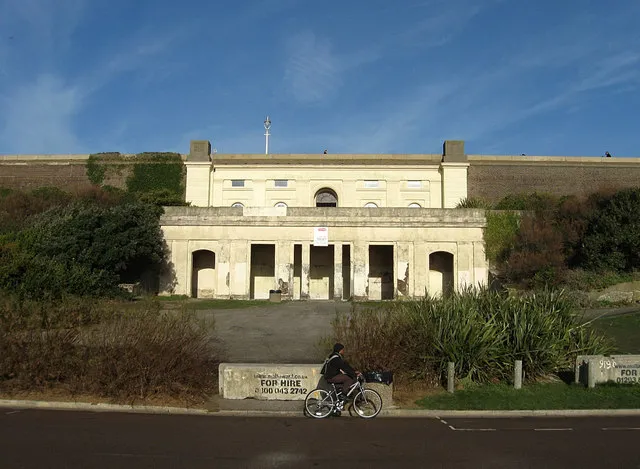
Photo: PattayaPatrol, CC BY-SA 4.0, via Wikimedia Commons
Before the Hyperlink, There Was the Flyer Rack
Every generation thinks it invented discovery. Ours points at algorithms; the one before pointed at search engines. But drive past the right highway exit in Nevada or rural Pennsylvania and you'll find the real ancestor of everything we curate here: the adult superstore, glowing like a beacon at 2 a.m., with a rack of laminated flyers by the door.
Those racks were links. Literal, physical, laminated links. Pick up a card for a club two states over, and you've just clicked.
'The Rack Was Our Homepage'
Dale, 71, ran a bookstore off I-80 in Nebraska for twenty-six years before retiring in 2009. He remembers the flyer economy with the fondness of a man describing his first car.
"Clubs, masseuses, other stores, even a guy who sold hot tubs — everybody wanted rack space," he told us over the phone. "The good spot was eye level. Second rack, third card from the left. We charged for that. Same as anybody selling ad placement today."
His conversion tactics sound almost eerily familiar:
- Placement hierarchy. Top-of-rack cards got the most pull-through. Today we call it above the fold.
- Reciprocal listing. Dale's flyers lived on racks in forty other stores. He'd never met most of those owners. It was a webring with gas stations.
- The free teaser. Every flyer promised something free at the destination — a drink, a pass, a look. The modern equivalent is the free preview wall.
- **Scarcity and freshness." New flyers got pulled if the number died. A dead card on the rack, Dale said, made the whole store feel stale. Sound familiar? Link rot isn't a web problem. It's a human one.
The Corkboard: User-Generated Content, 1974 Edition
While the flyer racks were the paid placements, the corkboard in the peep show hallway was something else entirely: an open platform. Torn edges, pushpins, handwritten numbers on notebook paper. Anyone could post. Nobody curated.
Marlene, who co-owned a store outside Reno until 2013, described it as "the wild west wall. We'd clean it up on Sundays and by Wednesday it was full again." Some of those handwritten notes, she suspects, were the era's equivalent of spam — or worse, scams. The store eventually assigned a teenager named Rick to vet what went up. Rick, whether he knew it or not, was a moderator.
The parallel is almost too clean: open posting, spam floods, the eventual hire of a trust-and-safety department. Every platform's lifecycle, played out on cork and pushpins.
The Exit Sign Is a Domain Name
Here's the thing that kept coming up in our interviews: location was everything, and the logic was identical to today's domain game. A store two miles off the interstate with a big lit sign did gangbusters business. A store five miles down a county road with no signage starved, no matter how good the inventory.
Owners bought billboards on the approach ramp the way modern operators buy type-in domains and search ads. They fought over the exit the way people fight over the .com. The product mattered less than the discoverability — which is the entire thesis of this website, frankly.
What the Old Model Gets Right That We've Forgotten
Comparing notes between Dale and Marlene's stories and a modern creator's link-in-bio page, three things stand out:
- Trust traveled through physical touch. You picked the flyer up. It had weight. A card that felt cheap reflected on the destination. Today's equivalent is page load speed and a clean design — the digital handshake.
- Distance created loyalty. If someone drove forty minutes to your store, they weren't browsing. They were converting. Modern traffic that arrives via a trusted referral link behaves the same way; it bounces less, spends more.
- Word of mouth beat advertising. Dale swears the flyers mattered less than truckers talking at the counter. Our own reporting on underground link communities found the same thing: recommendation still outperforms placement, every time.
The Rack Never Died — It Just Lost Its Lamination
Dale's store is a vape shop now. Marlene's is a dispensary, which she finds hilarious. But their model is alive in every bio-link page, every aggregator, every curated list like the one you're reading. Someone decides what's worth pinning up. Someone charges for the eye-level slot. Someone pulls the dead cards before they make the whole board look stale.
The internet didn't invent the steamy link. It just made the corkboard infinite — and made sure you'd never have to leave the highway to follow one.
If you've got stories from the flyer-rack era, our inbox is open. The best ones get pinned.