Seat 14A, Wi-Fi On: A Week on Overnight Greyhounds With America's Midnight Scrollers
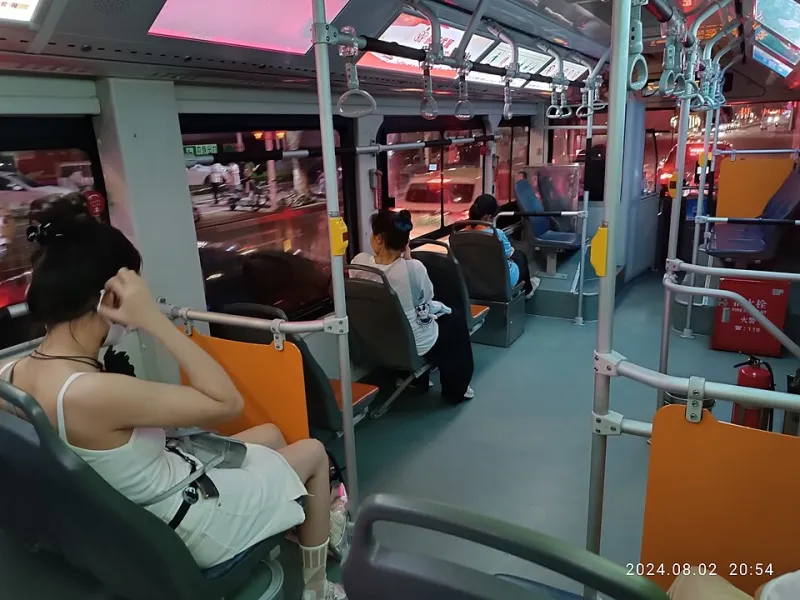
Photo: Yaui Jimdmei 2826, CC0, via Wikimedia Commons
There's a particular hour on an overnight bus when everyone stops pretending to sleep. Around 2 a.m. somewhere between Indianapolis and Louisville, the overhead reading lights flicker on one by one, phones come out of jacket pockets, and the quiet cabin fills with the soft blue glow of a thousand private moments.
I spent seven days riding Greyhound's night routes through the heartland and the South — Chicago to Memphis, Nashville to Dallas, a detour through Little Rock — asking a simple question of anyone willing to talk: what are you scrolling right now?
The Bus Is the Last Open Internet
Here's what surprised me most. On every single leg, the onboard Wi-Fi blocked the app stores. It filtered search engines. It flagged social media feeds with a cheerful little warning page. But a typed URL? Almost always got through.
"I don't even bother with apps anymore on the bus," a night-shift welder named Darrell told me somewhere outside Paducah. "I got three or four sites bookmarked. Type it in, you're there. The filter doesn't know what to do with that."
This is the quiet genius — or quiet accident — of how public network filtering actually works in 2024. The blocklists target the big, obvious channels: app marketplaces, search queries, social platforms. But a direct link, passed around in a group chat before boarding or saved in a notes app, sails straight through like it's not even there.
Everyone Knows Someone Who Knows a Link
The way people find things out here isn't through discovery. It's through inheritance.
A retired schoolteacher from Tupelo showed me a text thread with her sister labeled "for the road." A college kid heading home to Oklahoma described a Discord where friends trade links "like baseball cards." Nobody I talked to used a search engine for this stuff after dark. They had their three sites, their saved folders, their person.
"You don't Google it on the bus," a trucker's wife in Memphis laughed. "You Google it at home, save it, then bring it with you."
That's curation, whether the people doing it would use that word or not. Somebody upstream — a friend, a forum, an aggregator — already did the sorting. The passenger just needs the door.
The 2 A.M. Demographic Nobody Counts
Market research about adult traffic overwhelmingly comes from home broadband users. The overnight bus crowd doesn't show up in those surveys. They're transient, they're on shared networks, and their browsing windows are dictated by departure schedules, not bedtime routines.
What I noticed: their sessions are short and deliberate. No aimless scrolling. The bus Wi-Fi is spotty enough that wandering is expensive in patience. People open what they came for, they're done in ten minutes, and they go back to sleep against the window.
Compare that to the desktop hour-long sessions the industry is built around, and you start to understand why this audience is invisible in the data but enormous in raw headcount. Greyhound alone moves around sixteen million passengers a year. A meaningful slice of them are awake at 2 a.m. with a working URL.
What the Road Teaches You About Links
Riding the night routes, a few truths about the steamy web become obvious in a way they never do from a desk:
Simple survives. Every site people showed me was fast, lightweight, and worked on a weak cellular handoff between towers. The heavy, ad-stuffed destinations were the ones people had abandoned.
Memory is the real bookmark. Half the people I talked to could type their favorite site's address from memory. That's brand loyalty no analytics dashboard captures.
Trust travels by word of mouth. Nobody downloaded anything, nobody signed up for anything on the bus. They went where a trusted person — or a trusted list — said it was safe.
The Last Light Off
Somewhere outside Little Rock, around 3 a.m., the cabin finally went dark again. One by one, phones slid back into pockets, screens dimming to black. The driver's radio murmured something about a fuel stop in Texarkana.
Darrell, the welder, put it best before he nodded off: "The internet out here is whatever you brought with you."
For a lot of America — the travelers, the night shift, the ones between addresses — that's not a limitation. It's the whole point. A good link is portable. It doesn't need an app store's permission or a network's approval. It just needs to be typed once, remembered, and passed along.
And at 2 a.m. on a bus rolling through the dark, that's the entire internet that matters.