Ink, Receipts, and Rest Stops: The Offline Highway Where Steamy Links Never Die
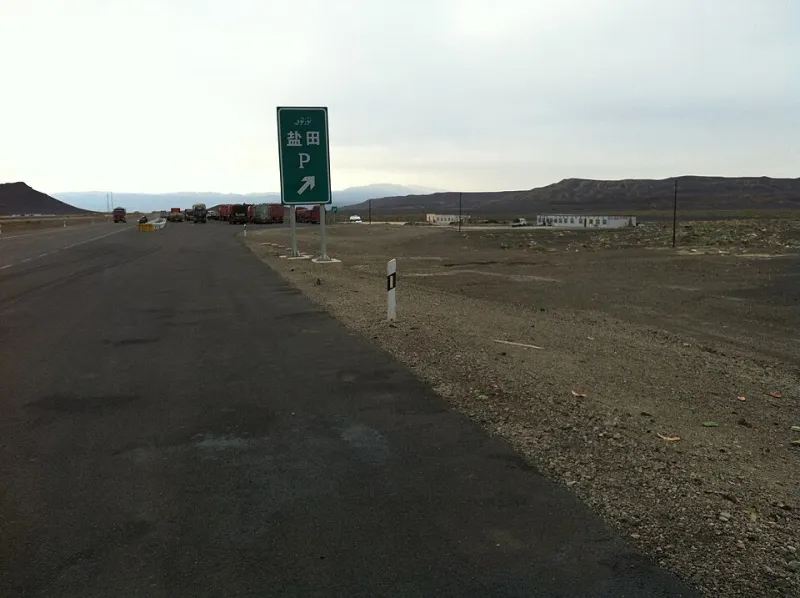
Photo: Matthew Summerton, CC BY-SA 3.0, via Wikimedia Commons
Somewhere outside El Reno, Oklahoma, in a truck stop where the Wi-Fi password is taped to the register and the coffee is older than some of the drivers, there's a notepad by the pay phone. Nobody has used that pay phone in years. But the notepad is full.
Phone numbers. Jokes. And, wedged between a reminder about a load in Denver and someone's fantasy football league, a web address written in careful block letters — the kind of address that doesn't show up in any search engine's top results, because the person who wrote it didn't want it to.
We spent three weeks asking a simple question: when the signal dies, where does the steamy web go? The answer, it turns out, is ink.
The Dead Zone Economy
America is blanketed in dead zones. Roughly a quarter of rural residents report no reliable home broadband, and interstates cut through stretches of the country where your phone shows a single bar and then, mercifully, nothing at all. For the adult web — an ecosystem already starved of mainstream discovery channels — these gaps should be fatal.
They aren't. They've just pushed the traffic onto paper.
"You'd be amazed what people leave behind," says Marlene, who has managed the counter at a travel center off I-40 for eleven years. "Receipts with stuff scrawled on the back. Matchbooks. One guy wrote a whole address on a napkin and weighted it down with his tip." She doesn't click the links herself, she says, but she's noticed the same few addresses reappearing for months, like a conversation she's only hearing one side of.
Graffiti as a Distribution Channel
Rest stop bathrooms have always been a bulletin board of the id. What's changed is the content. Where previous generations left phone numbers, today's entries increasingly include full URLs — sometimes with a review attached, sometimes with a warning ("dead link, don't bother"), which is its own fascinating form of community moderation.
A janitor we'll call Dwayne, who has cleaned facilities at state rest areas across three states, put it plainly: "The good ones get written over and over. Somebody checks 'em, comes back, rewrites 'em. It's like a star rating system, but with a pen."
That's curation. No algorithm, no thumbnail grid, no cookie-based retargeting — just strangers vouching for strangers in the one place America is guaranteed to linger.
The Notepad Effect
The truck stop notepad deserves its own study. These communal pads sit at the exact intersection of boredom, privacy, and transience — a traveler has minutes to kill, nobody looking over their shoulder, and no intention of returning. Whatever gets written there is written for a stranger by definition.
We photographed (with permission) the margins of a dozen pads across the Southwest. Adult URLs showed up in roughly a third of them, usually alongside a short descriptor — a site name, a niche, occasionally the word "real" underlined twice. In a content landscape drowning in fakes and bait-and-switch landing pages, that single handwritten word might be the most honest recommendation engine left in America.
Why Analog Survives
There's a practical logic here. A handwritten link can't be taken down by a hosting provider. It can't be shadow-banned, deindexed, or flagged by a payment processor. It survives precisely because no platform owns it.
It also travels. A receipt tucked into a sun visor in Amarillo resurfaces at a car wash in Tulsa. A napkin makes it into a glovebox and then a flea market table. Paper moves at the speed of people, and people — unlike algorithms — have appetites.
There's a romance to it that we didn't expect. The digital steamy web is loud, saturated, desperate for your click. The analog version is quiet. A few careful letters in a notepad. A URL passed hand to hand like contraband, or like a poem.
What It Means for the Online World
For site operators and creators, the lesson is uncomfortable but clear: trust is the product. The links that get rewritten in bathroom stalls and scribbled on receipts are the ones that delivered on their promise. Everything else got left on the paper — or crossed out.
The algorithm wants you to believe discovery is a feed. Out on the highway, past the last cell tower, America disagrees. It's writing recommendations in ballpoint, one rest stop at a time.
And somewhere out there, that notepad by the dead pay phone has a fresh page on top now. Give it a week.